Loading...
Serving Laredo, TX and surrounding areas. (956) 815-3260
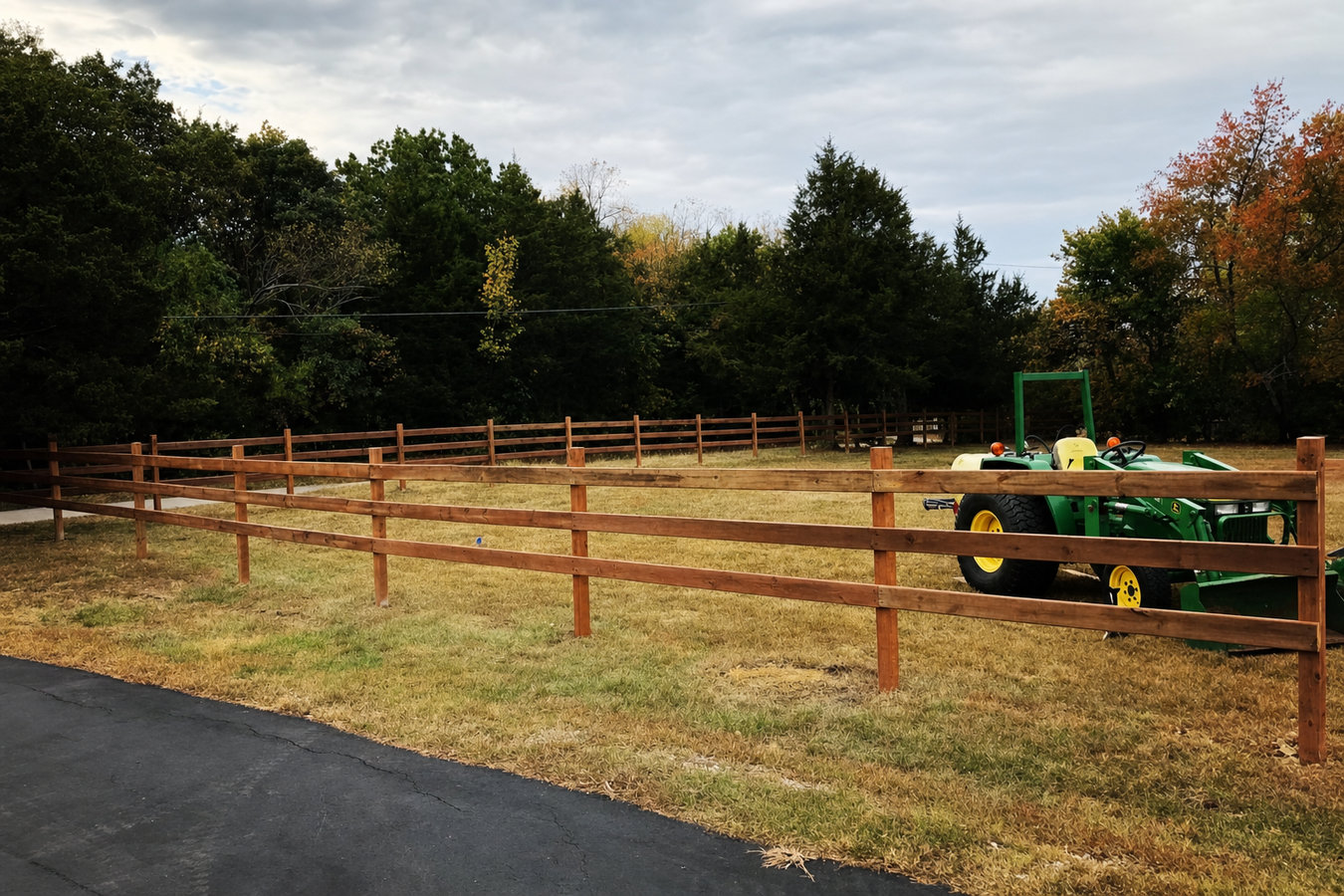
Caliche soil, feral hog pressure, and extreme heat all affect how farm fencing holds up in Webb County. We walk your property before we quote and build for the conditions your land actually faces.
Farm and ranch fencing in Laredo covers perimeter fencing to keep livestock in, cross-fencing to divide pastures, and barrier fencing to keep wildlife and predators out - most small-property jobs of 10 to 20 acres take a crew two to five days, and costs typically range from $1.50 to $6.00 or more per linear foot depending on fence type, terrain, and soil conditions.
The right fence type depends on what animals you are managing, how much land you are enclosing, and what threats are common on your property in Webb County. Barbed wire is the most widely used option on Texas ranches because it covers large distances at a lower cost, but it is not the right choice for every situation - particularly if you are managing goats, sheep, or dealing with active feral hog pressure. Farm and ranch fencing is a different discipline from residential yard work, and local experience matters.
If you also need secure containment around working areas or corrals, our pet and dog fencing and chain link fence installation services are frequently paired with ranch perimeter work for smaller high-traffic zones.
If animals are in the wrong pasture or outside the fence line more than once, the fence is failing somewhere. Walk the perimeter and look for sagging wire, broken posts, or sections where the bottom wire has been pushed up. In Webb County, feral hog activity is a common culprit - look for rooted-up soil along the fence base.
Posts that lean or rock when you push them are no longer doing their job. In Laredo's caliche-heavy soil, posts that were not set deep enough can work loose over time, especially after the soil cracks during drought. A leaning post puts stress on the wire and will cause the whole section to sag.
Wire that hangs low between posts or shows visible rust spots is past its useful life in those sections. Sagging wire is an invitation for animals to push through or jump over, and rust weakens wire faster after heavy rain events that follow long dry spells - a common South Texas pattern.
If you are moving from cattle to goats or sheep, your existing barbed wire fence almost certainly will not contain them. Expanding your herd or adding a new pasture rotation system means your current fence layout may no longer work for how you are using the land. This is the right time for a contractor assessment.
We install barbed wire, woven wire, high-tensile wire, and pipe-and-cable fencing across properties in Webb County and the surrounding area. Barbed wire is the most common choice for cattle on open range land - it is affordable, fast to install over long distances, and proven across South Texas for decades. For operations managing smaller livestock like goats or sheep, woven wire with proper bottom-wire construction is a much better fit and also provides real resistance to feral hog pressure. If you are looking at a large perimeter run where long-term maintenance cost matters as much as installation cost, we can walk you through high-tensile wire as an alternative.
Every farm fence we build starts with the corners. Strong corner assemblies with proper H-brace or diagonal-brace construction are what keep the entire fence line tight over time - a contractor who skimps on corners will produce a fence that sags and loosens within a year or two no matter how good the wire looks in between. We also hang gates with larger, deeper-set posts than line posts because gates are the most-used and most likely to fail first. For homeowners who also need containment around smaller areas near the house or yard, ask about combining ranch perimeter work with our chain link fence installation for corrals and work yards.
The most widely used option on Texas ranches - affordable, covers large distances quickly, and suited for cattle on flat to gently rolling land.
Better for goats, sheep, and smaller livestock that can push through or under standard barbed wire, and adds resistance to feral hog pressure when built correctly.
Suited to large perimeter runs where fewer posts and lower long-term maintenance costs matter more than initial cost savings.
Heavy-duty option for high-traffic areas, corrals, or gates where animals put concentrated stress on the fence line.
The biggest challenge on most Webb County fencing jobs is the caliche layer. This hard calcium carbonate crust sits just below the surface across much of the land around Laredo, and a standard post driver will not get through it. Contractors who try to work with the wrong equipment end up with posts that are too shallow and a fence that starts leaning within a few seasons. We work with a hydraulic auger on jobs where caliche is present, and we set posts deep enough to account for the soil cracking and shifting that comes with Laredo's dry spells. Landowners in Mirando City and Bruni regularly deal with this same soil profile, and those communities are well within our service area.
Feral hog pressure is the other factor that separates South Texas ranch fencing from what works elsewhere. Webb County has an active feral hog population, and hogs root under fence lines rather than pushing through them - which means a fence built without a hog-specific bottom wire configuration will need repairs much sooner than it should. Laredo summers above 100 degrees F also affect project timing - we schedule heavy work for early morning hours and build realistic timelines that account for heat slowdowns, because a project that stalls out in a July heat wave benefits nobody. Spring bookings fill fast, so reaching out early helps you get the installation window you need. The Texas A&M AgriLife Extension provides solid guidance on fencing types and corner construction that we follow as an industry standard.
We will ask how many acres you are fencing, what animals you are managing, and whether you have existing fence to work around. Be ready to describe your land in general terms - flat or hilly, open or brushy - and whether you know where your property lines are. We respond within 1 business day.
We walk your fence line, check the soil conditions, identify where gates need to go, and review any existing posts or wire. Any quote given over the phone without a site visit should be treated as a rough estimate only. Our written quote breaks out materials and labor so you can see exactly what you are paying for.
Before work begins, property boundaries need to be confirmed - ideally with survey stakes already in place. Installing even a few feet over a property line can create costly legal disputes. You will also need to move livestock out of the work area and clear any brush along the planned fence line.
We start with corner and end posts - the anchor points for the entire fence line. In Laredo's caliche soil, this step requires a hydraulic auger. Wire is then stretched and attached in sections, with gates hung last and adjusted so they swing freely and latch securely before we leave.
We walk your land before we price anything. No phone ballparks, no surprises on the final bill. Free on-site quote, 1 business day response.
(956) 815-3260Contractors unfamiliar with Webb County soil often underestimate how much equipment and time caliche takes. We have the hydraulic auger and the experience to set posts at the right depth the first time, so your fence holds through drought cycles and heat without leaning or loosening.
Feral hogs are widespread across Webb County and root under fences rather than pushing through them. We build the bottom of every farm fence specifically to resist hog pressure - because a fence that works for cattle but not for hogs needs constant repairs in this part of Texas.
We walk your land before we give you a price. A quote given over the phone without a site visit is not a real number - it is a guess that can change significantly once the crew sees the actual terrain. Our written, itemized quote after the site visit is what we hold ourselves to.
We work on rural properties throughout Webb County and the surrounding area, not just inside Laredo's city limits. If you are in the brush country outside town, we have the equipment and experience to get there and get the job done. Local rancher references are available on request.
Farm and ranch fencing is a long-term investment in your land and your livestock operation. A fence built correctly for South Texas conditions - right post depth, proper corner assemblies, hog-resistant bottom wire - will hold for 20 to 30 years with basic maintenance. A fence that was not built for local conditions may start failing within a few seasons. The Texas and Southwestern Cattle Raisers Association represents the ranching community across this region, and the fencing standards they support reflect what actually works in South Texas - which is what we build to.
Secure containment fencing for dogs and other pets on residential and rural properties near Laredo.
Learn MoreDurable chain link fencing for corrals, work yards, and utility areas on ranch properties.
Learn MoreSummer heat slows ranch fencing work considerably. Call or submit a request today to lock in your spring installation date before the season books up.